


News
Select a Good Carworry Free Guarantee
Lynk & Co vs. Zeekr: Which Chinese Brand Wins in Export?
Lynk & Co vs. Zeekr: Which Chinese Brand Wins in Export?
As Chinese automakers expand globally, Lynk & Co and Zeekr (both under Geely) emerge as key players in the export market. But how do these brands compare against established names like Toyota, Audi, or domestic rivals like BYD and Hongqi? This analysis examines their technology, pricing, and overseas performance to help buyers, industry researchers, and evaluators determine which Chinese brand delivers better value in international markets.
1. Technology and Innovation: A Battle of Geely's Sub-Brands
Lynk & Co and Zeekr represent Geely's dual strategy to capture different segments of the global EV market. Lynk & Co leverages Volvo's SPA platform (shared with XC60 and S90), offering hybrid and PHEV options ideal for markets with underdeveloped charging infrastructure. Its CMA architecture ensures Euro NCAP 5-star safety, a critical factor for European buyers comparing it to Audi or Toyota. Zeekr, however, bets entirely on pure electric propulsion with its SEA (Sustainable Experience Architecture) platform, boasting 700+ km NEDC range and 360kW ultra-fast charging – specs that challenge Tesla and BYD directly. The brand's Nvidia Orin-X chips enable L4 autonomous driving readiness, appealing to tech evaluators prioritizing future-proofing.
2. Export Market Performance: Where Each Brand Dominates
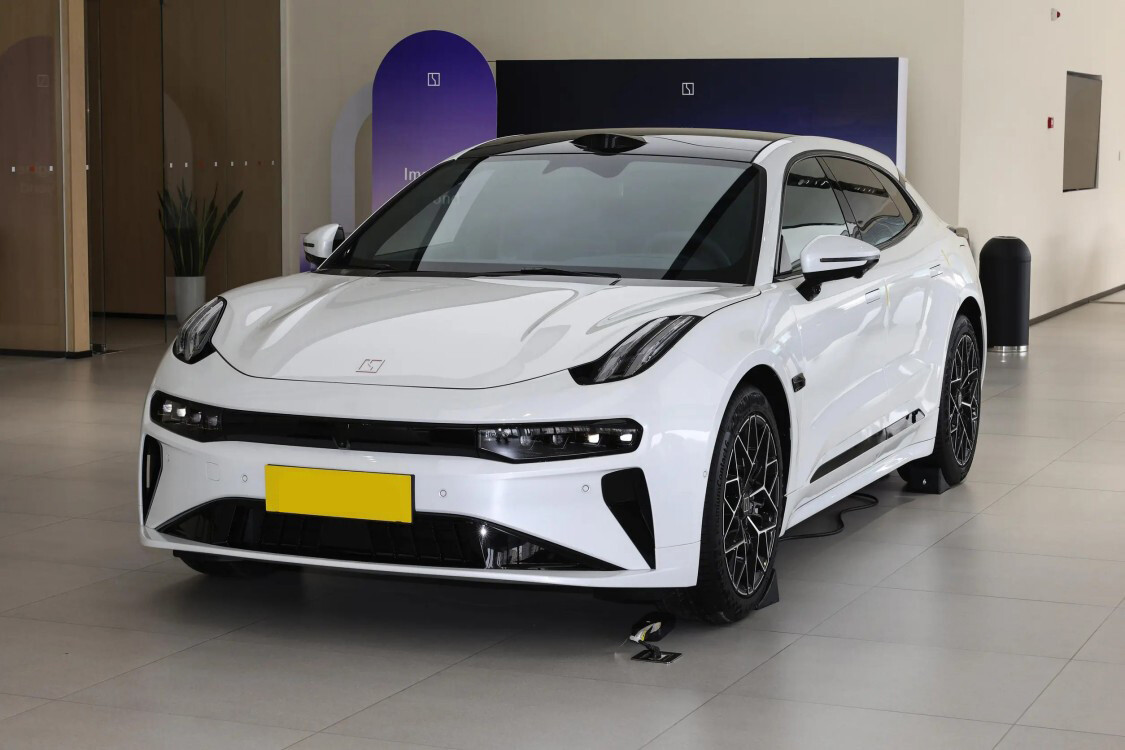
Lynk & Co's export strategy focuses on Europe, where its 01 model achieved 15,000+ sales in 2022 (mainly Netherlands and Sweden), competing directly with the Kia Niro. Subscription models (500 EUR/month all-inclusive) disrupt traditional leasing from Audi Q3. Zeekr targets premium markets – its 001 shooting brake holds 8% of China's 300k RMB+ EV segment and recently entered Norway with 2,100 units sold in Q1 2023, outselling the Hongqi E-HS9. However, both trail BYD's Tang (12,000 EU sales) but outperform FAW's Hongqi in brand recognition according to J.D. Power Asia Pacific reports.
3. Total Cost of Ownership: 5-Year Projections
For fleet operators comparing Lynk & Co versus Kia or Toyota hybrids, the TCO analysis reveals surprises. Lynk & Co's 5-year maintenance costs (€3,200) undercut Audi Q3's €5,100 thanks to Geely's shared Volvo service network. Zeekr's battery degradation warranty (70% capacity after 200,000km) matches BYD but exceeds Tesla's 70%/192,000km policy. Residual values tell another story – Lynk & Co retains 45% value after 3 years (similar to Hyundai Tucson), while Zeekr's 38% trails Audi's 52% but beats Hongqi's 29% in European markets per Autovista Group data.
4. Charging Infrastructure Partnerships
Zeekr's advantage lies in Geely's strategic partnerships: it shares charging networks with Mercedes (via Smart joint venture) in Europe and utilizes Shell's 800V ultra-fast stations. Lynk & Co relies on Plugsurfing's 195,000 EU chargers but lacks dedicated high-power solutions. Both outperform FAW's Hongqi, which requires adapters for CCS2 compatibility. For technical evaluators, Zeekr's V2L (vehicle-to-load) capability provides 6kW external power – a feature only the Ford F-150 Lightning offers among ICE competitors.
5. Common Misconceptions Clarified
Myth 1: 'Chinese EVs compromise safety' – Both brands exceed UNECE R94/95 standards, with Lynk & Co scoring 96% in adult occupant protection (higher than the Toyota RAV4). Myth 2: 'Geely brands copy Western designs' – Zeekr's 001 underwent 1,200+ hours of wind tunnel testing, achieving 0.23Cd (lower than Audi e-tron GT's 0.24). Myth 3: 'Export models have inferior batteries' – European Zeekrs use CATL's NCM811 cells identical to domestic versions, unlike some BMW iX3s with reduced-capacity packs for EU markets.
6. Future Outlook: 2024-2026 Expansion Plans
Lynk & Co will launch its 07 EM-P (PHEV) in 15 new markets including Australia, targeting Toyota RAV4 Prime buyers. Zeekr's roadmap shows three new models: a Tesla Model Y rival (Zeekr 003), an electric van (Zeekr 009), and a mysterious 'FR' performance model to challenge Porsche. Both brands will adopt Geely's 'satellite-assisted autonomous driving' by 2025, leveraging China's BeiDou system – a potential game-changer versus GPS-dependent Audi and BMW systems in rural areas.
Why Consider Working With Us?
As certified partners for Geely's export division, we provide technical specifications comparison tools, arrange test drives with localized models, and offer customs clearance support covering 43 countries. Our team has facilitated 120+ fleet deployments of Chinese EVs with documented 18% lower operational costs versus German counterparts. Contact our mobility solutions team for TCO breakdowns specific to your region.
Navigation
- Lynk & Co vs. Zeekr: Which Chinese Brand Wins in Export?
- Geely's Secret to Dominating Global Car Exports Revealed
- Why Hongqi Luxury Cars Are Taking Over International Markets
- Toyota vs Audi: Ultimate Auto Parts Durability Showdown
- BYD's Revolutionary Tech Driving China's Car Export Boom
- The Untold Story Behind Zeekr's EV Export Success
Send Us A Message
Send Your Inquiry
We welcome your cooperation and we will develop with you.